














Key Takeaways
- Sitting in one position for long periods at a desk job may contribute to neck and shoulder pain, lower back pain, musculoskeletal disorders, and other health issues.
- Simple stretches you can do without leaving your chair include triceps stretches, overhead reaches, shoulder stretches, hip and knee flexion, hamstring stretches, and neck stretches. Hold each stretch for 10 to 30 seconds.
- To avoid repetitive stress injuries, set a timer to remind yourself to move every hour, consider using a standing desk, or walk during phone calls and meetings.
Work-related health problems aren’t just limited to heavy manufacturing or construction. They can occur in all types of industries and work environments, including office spaces.
Staying in one position while performing repetitive motions is typical of a desk job, but it may not be the most comfortable or best for your health, especially over long periods.
The habits we build at our desk, especially while sitting, can contribute to discomfort and health issues, including:
The good news is that moving or stretching is a buildable habit.
A simple way to make sure you include movement in your daily life is to set a timer to remind you to take a quick walk or stretch. If you’re pressed for time, there are even certain stretches you can do at your desk.
Keep reading for some simple exercises you can do without leaving your chair.
Remember to breathe normally throughout the stretches, and never hold your breath. With each stretch, you may find yourself more flexible. Don’t go further than is comfortable.
Top tip: Exhale as you lean into the stretch for a greater range of motion.
This article is Day 2 of Healthline’s 30 Days of Movement Challenge. Learn more about how you can build long-lasting fitness habits through quick and accessible exercises by following the Challenge.
Quick start guide
- Duration: 20 minutes
- Equipment: Chair
- Accessibility: Low impact
- Level: Beginner-friendly
Triceps stretches
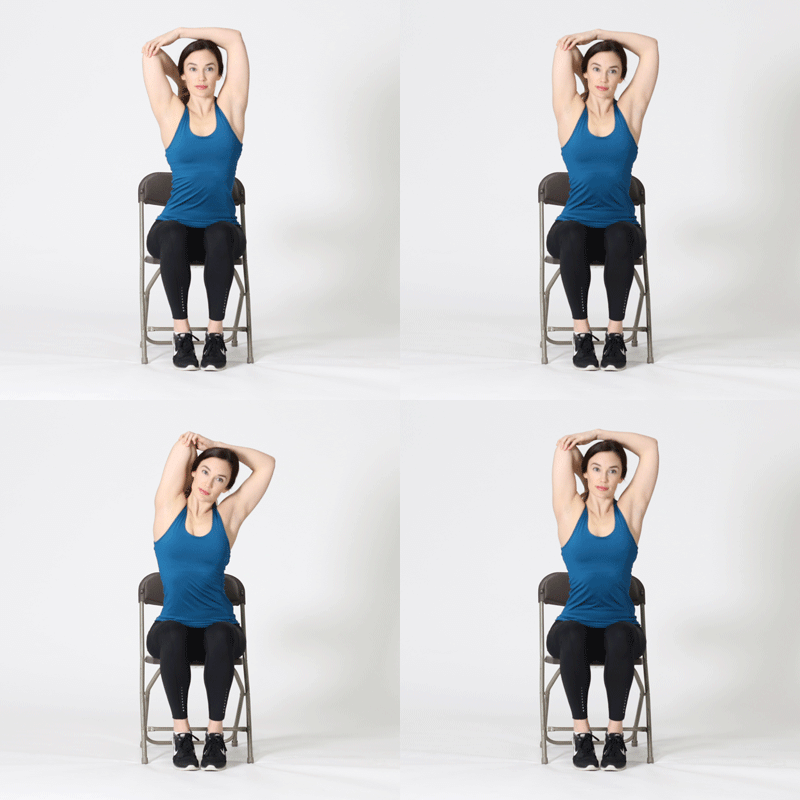
- Raise your arm and bend it so that your hand is reaching toward the opposite shoulder.
- Use your other hand and pull your elbow toward your head.
- Hold for 10 to 30 seconds.
- Repeat on the other side.
Overhead reach stretch
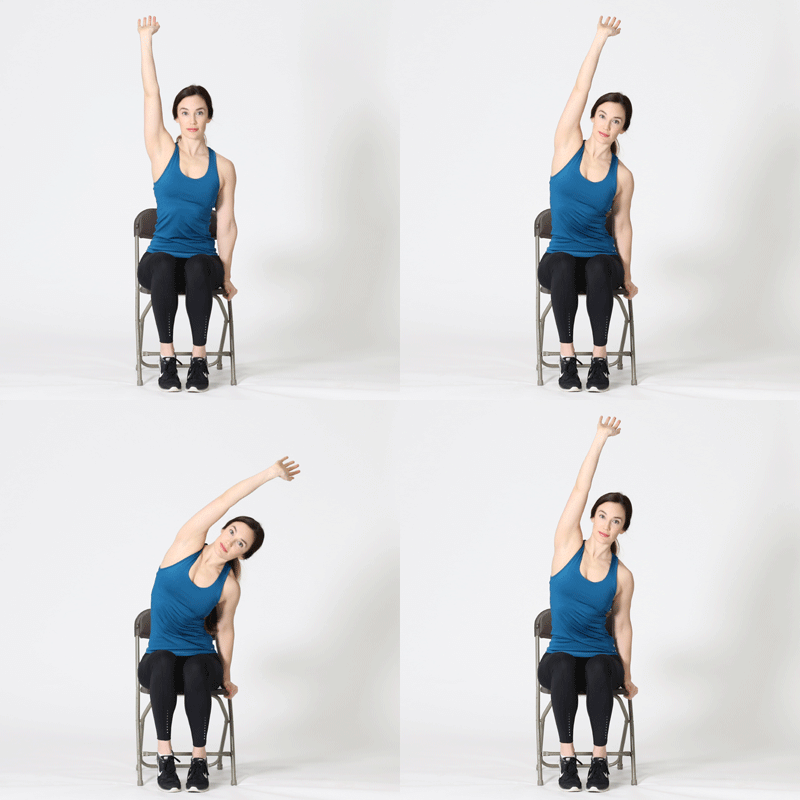
- Extend one arm up above your head.
- Reach toward the opposite side.
- Hold for 10 to 30 seconds.
- Repeat on the other side.
Shoulder, or pectoralis stretch
- Clasp hands behind your back.
- Push the chest outward, and raise your chin.
- Hold the pose for 10 to 30 seconds.
Forward stretch
This stretch is also known as the rhomboid upper or upper back stretch.
- Clasp your hands in front of you and lower your head in line with your arms.
- Press forward and hold for 10 to 30 seconds.
Hip and knee flexion stretch
- Hug one knee at a time, pulling it toward your chest.
- Hold the pose for 10 to 30 seconds.
- Alternate for the other leg.
Hamstrings stretch
- Remaining seated, extend one leg outward and prop your foot on a second chair.
- Bend forward from your waist.
- Hold for 10 to 30 seconds.
- Repeat on the other side.
Note: Be sure to do this one leg at a time, as doing this exercise with both legs out can cause back issues.
Shoulder shrug
- Raise both shoulders at once up toward the ears.
- Drop them and repeat 10 times each direction.
Neck stretches
- Relax and lean your head forward.
- Slowly roll toward one side and hold for 10 seconds.
- Repeat on the other side.
- Relax again and lift your chin back to the starting position.
- Do this three times in each direction.
Upper trap stretch
- Gently pull your head toward each shoulder until you feel a light stretch.
- Hold the pose for 10 to 15 seconds.
- Alternate each side.
Move to a new position throughout the day to avoid repetitive stress injuries.
You may want to try:
- standing up while on the phone or eating lunch
- getting a flexible standing desk so you can change your position throughout the day
- walking laps during quick meetings
- getting up from your seat every hour and walking around the office
Ask your manager or human resources department about ergonomic furniture.